 Auto-Parallel Technologies, Inc.
Products :: PAGI :: Overview
Async Perl. Real-time protocols. One interface.

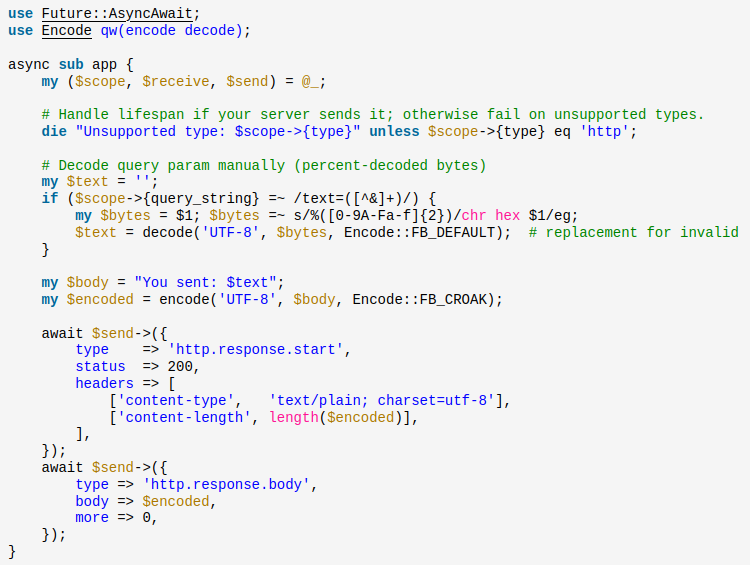
PAGI (Perl Asynchronous Gateway Interface) is an async-first standard interface between Perl servers, frameworks, and applications. It is the spiritual successor to PSGI, designed for streaming and long-lived connections where classic request/response is not enough.
PAGI unifies multiple protocol types under one application model: an async handler receives a scope plus receive/send functions, and all IO is explicit via Futures. Core interface stability is the goal; higher-level convenience layers continue to evolve.
Key capabilities of PAGI include:
- One interface for HTTP, WebSocket, SSE, and lifespan (startup/shutdown)
- Event-based messaging for streaming responses and real-time apps
- Explicit backpressure via Futures, for predictable performance under load
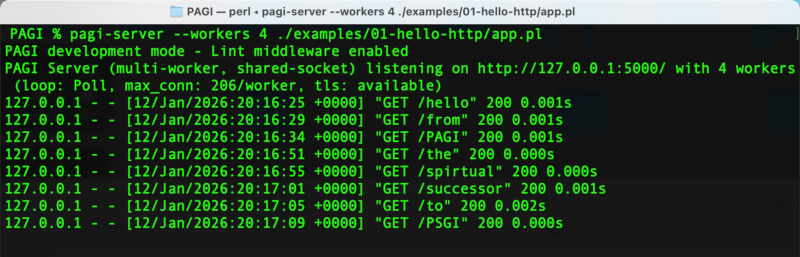
- Reference server plus routers, middleware, and bundled apps
- Bridge for legacy sync applications via WrapPSGI
The PAGI distribution ships a full reference stack: 36 middleware modules, 17 bundled apps, plus extensive tests and examples to help teams start building quickly.
The included compliance report documents concrete results as of December 2025: 10/10 HTTP/1.1 compliance tests passed, 49/49 protocol fuzzing tests passed, and 215/301 WebSocket Autobahn cases passed (71% overall).